

Do wire mesh cages rust?
In the industrial and storage sectors, wire mesh cages are indispensable tools. They offer versatility, durability, and efficient storage solutions. As a wire mesh cage supplier, one of the most common questions I encounter is whether wire mesh cages rust. This blog post aims to delve into this topic comprehensively, exploring the factors that contribute to rusting, the types of wire mesh cages and their rust - resistance, and how to prevent rusting.
Understanding Rust
Rust is a form of corrosion that occurs when iron or steel comes into contact with oxygen and water. It is essentially a chemical reaction that results in the oxidation of the metal, forming iron oxide, which is the reddish - brown substance we commonly recognize as rust. The chemical equation for the rusting process is (4Fe + 3O_{2}+ 6H_{2}O\rightarrow4Fe(OH){3}), and (Fe(OH){3}) further decomposes to form (Fe_{2}O_{3}\cdot nH_{2}O) (rust). Rusting can weaken the structural integrity of wire mesh cages, reducing their lifespan and potentially causing safety hazards.
Types of Wire Mesh Cages and Their Rust - Resistance
Galvanized Carbon Steel Wire Mesh Cage
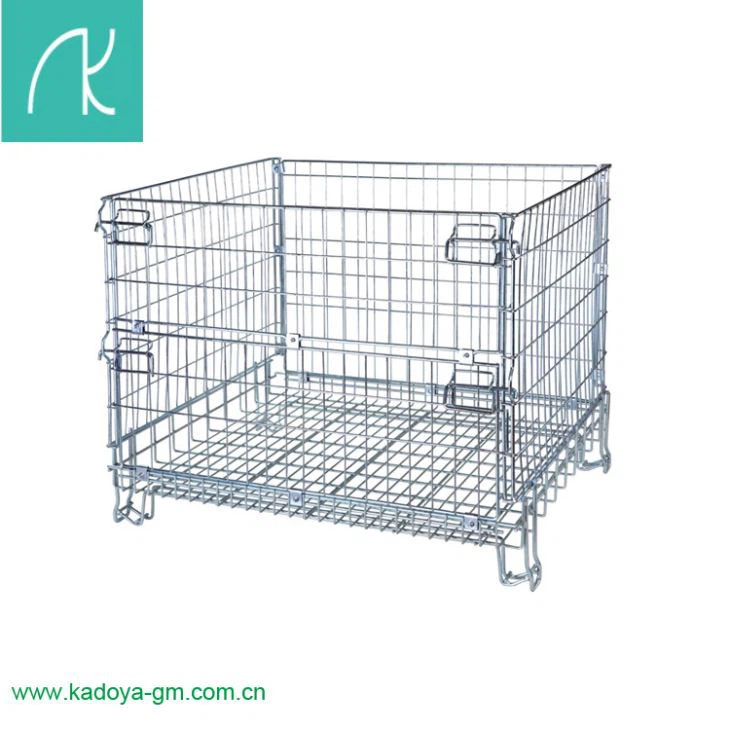
Galvanized carbon steel wire mesh cages are highly popular in the market. Galvanized Carbon Steel Wire Mesh Cage are made by coating carbon steel with a layer of zinc. Zinc acts as a sacrificial anode, which means that when the cage is exposed to a corrosive environment, the zinc corrodes instead of the underlying steel. This significantly enhances the rust - resistance of the cage.
The galvanization process can be either hot - dip or electro - galvanizing. Hot - dip galvanizing involves immersing the steel in a bath of molten zinc. This results in a thick, robust zinc coating that provides long - term protection. Electro - galvanizing, on the other hand, uses an electric current to deposit a thin layer of zinc onto the steel. While electro - galvanized cages are more cost - effective, they may not offer the same level of long - term rust protection as hot - dip galvanized ones.
Folding Turnover Cage
Folding Turnover Cage are designed for easy storage and transportation. These cages can be made from various materials, including stainless steel and galvanized steel. Stainless steel folding turnover cages are highly resistant to rust due to the presence of chromium in their composition. Chromium forms a passive oxide layer on the surface of the steel, preventing oxygen and water from reaching the underlying metal. However, stainless steel cages can be more expensive than their galvanized counterparts.
Galvanized folding turnover cages provide a good balance between cost and rust - resistance. Properly galvanized cages can withstand normal environmental conditions and light exposure to moisture without significant rusting.
Foldable Wire Mesh Storage Cage
Foldable Wire Mesh Storage Cage are commonly used in warehouses and storage facilities. Similar to other types of wire mesh cages, their rust - resistance depends on the material used. As with the previous cases, galvanized and stainless steel are the two main choices.
Foldable wire mesh storage cages made from galvanized steel are suitable for most indoor storage applications. If they are well - maintained and not exposed to excessive moisture, they can last for many years without rusting. However, in high - humidity or corrosive environments, stainless steel cages may be a better option.
Factors Affecting Rusting of Wire Mesh Cages
Environmental Conditions
The environment in which the wire mesh cage is placed plays a crucial role in its rusting. In humid environments, the presence of water vapor in the air increases the likelihood of rusting. Coastal areas, for example, have high humidity levels and also contain salt in the air, which can accelerate the rusting process. Industrial areas with high levels of pollutants can also be more corrosive to wire mesh cages.
Surface Damage
Scratches, dents, or other forms of surface damage can expose the underlying metal of the wire mesh cage to oxygen and water, making it more susceptible to rusting. During transportation or regular use, the cage may come into contact with sharp objects or experience impacts that cause surface damage.
Maintenance
Proper maintenance can significantly reduce the risk of rusting. Regular cleaning to remove dirt, debris, and corrosive substances can prevent the buildup of contaminants that can accelerate rusting. Additionally, inspecting the cage for any signs of damage and treating them promptly can help extend the cage's lifespan.
Preventing Rust in Wire Mesh Cages
Coating Application
Applying a protective coating on top of the existing galvanized layer or to stainless steel cages can provide an extra layer of protection. Paint, powder coating, or epoxy coatings can isolate the metal from the environment, reducing the chances of rusting. These coatings can also enhance the aesthetic appeal of the cage.
Avoiding Moisture
Storing wire mesh cages in a dry environment is essential for preventing rust. If the cages are used outdoors, they should be covered with a waterproof tarp when not in use. In indoor settings, proper ventilation can help reduce humidity levels and prevent moisture accumulation.

Prompt Repairs
As soon as any signs of surface damage are detected, they should be repaired immediately. For galvanized cages, applying a zinc - rich paint to the damaged area can help restore the protective barrier. For stainless steel cages, sanding and polishing the damaged area can sometimes remove surface contaminants and restore the passive oxide layer.
Conclusion
In conclusion, wire mesh cages can rust, but the risk can be significantly reduced through appropriate material selection, proper maintenance, and attention to environmental conditions. Galvanized carbon steel wire mesh cages, folding turnover cages, and foldable wire mesh storage cages all have different levels of rust - resistance, and customers can choose the most suitable option based on their specific needs and budgets.
If you are in the market for high - quality wire mesh cages and want to ensure that they meet your rust - resistance requirements, feel free to reach out to us. We are a leading wire mesh cage supplier with extensive experience in providing customized solutions. Contact us today to start a conversation about your procurement needs, and let us help you find the perfect wire mesh cages for your business.
References
- Callister, W. D., & Rethwisch, D. G. (2010). Materials Science and Engineering: An Introduction. Wiley.
- Uhlig, H. H., & Revie, R. W. (1985). Corrosion and Corrosion Control: An Introduction to Corrosion Science and Engineering. Wiley.
- ASM International. (2004). Metals Handbook: Corrosion. ASM International.