

Are Stainless Steel IBC Tanks Compatible with Different Types of Liquids?
As a reputable supplier of Stainless Steel IBC Tanks, one question that I am frequently asked by customers is whether these tanks are compatible with different types of liquids. This query is of utmost importance, as the compatibility between the tank material and the stored liquid has a direct impact on the safety, efficiency, and longevity of the storage solution. In this blog post, I will delve into the details of the compatibility of Stainless Steel IBC Tanks with various liquids, providing insights based on scientific knowledge and real - world experience.
Properties of Stainless Steel
Stainless steel is an alloy primarily composed of iron, chromium, and often nickel, along with other elements. The addition of chromium is what gives stainless steel its corrosion - resistant properties. When chromium reacts with oxygen in the air, it forms a thin, invisible, and self - healing oxide layer on the surface of the steel. This layer acts as a barrier, preventing further oxidation and corrosion of the underlying metal.
The high corrosion resistance of stainless steel makes it suitable for a wide range of applications, including the storage of liquids. Different grades of stainless steel are available, each with its own set of properties and levels of corrosion resistance. For IBC Tanks, common grades include 304 and 316 stainless steel. Grade 304 is a general - purpose stainless steel that offers good corrosion resistance in most environments. Grade 316, on the other hand, contains molybdenum, which enhances its resistance to pitting and crevice corrosion, especially in environments with chloride ions.
Compatibility with Different Types of Liquids
Water - Based Liquids
Water is one of the most common liquids stored in Stainless Steel IBC Tanks. Stainless steel has excellent compatibility with water, whether it is distilled water, tap water, or even slightly brackish water. The corrosion - resistant properties of stainless steel prevent rusting, ensuring that the water remains free from contaminants introduced by the tank's interior surface.
In addition to pure water, many water - based solutions such as aqueous chemicals, detergents, and cleaning agents can also be safely stored in stainless steel IBC Tanks. These solutions typically do not react with the stainless steel surface, as long as the pH of the solution remains within a reasonable range. However, it is important to note that extremely acidic or alkaline water - based solutions may require special consideration and, in some cases, a specific grade of stainless steel.
Chemicals
The compatibility of Stainless Steel IBC Tanks with chemicals depends on the nature of the chemicals. For non - oxidizing acids like sulfuric acid and hydrochloric acid, at low to moderate concentrations, 304 stainless steel may be sufficient. However, as the concentration and temperature increase, the risk of corrosion rises, and 316 stainless steel or even higher - grade alloys may be required.
Oxidizing acids, such as nitric acid, are generally more aggressive towards metals. Fortunately, stainless steel has good resistance to nitric acid, especially at low to moderate concentrations. But again, high - concentration and high - temperature nitric acid can cause corrosion, and appropriate grade selection is crucial.
For alkaline solutions, stainless steel is also quite compatible. Sodium hydroxide and potassium hydroxide solutions, which are commonly used in industrial processes, can be stored in stainless steel IBC Tanks, provided that the concentration and temperature are within the limits of the selected stainless - steel grade.

Some solvents, such as alcohols, ketones, and esters, are also compatible with stainless steel. These solvents do not react chemically with the stainless - steel surface, making stainless steel IBC Tanks a suitable storage option. However, certain halogenated solvents may pose a risk of corrosion, especially in the presence of moisture.
Petroleum - Based Liquids
Stainless Steel IBC Tanks are well - suited for storing petroleum - based liquids, including gasoline, diesel, and various lubricants. The non - reactive nature of stainless steel ensures that the structural integrity of the tank is maintained, and the stored liquids are not contaminated. Additionally, stainless steel tanks are less likely to develop internal rust or scale, which can be a problem with carbon - steel tanks when storing petroleum products.
One of the advantages of using stainless steel for storing petroleum - based liquids is its ability to resist the effects of oxidation. Oxidation can cause the degradation of petroleum products over time, leading to the formation of sludge and varnish. Stainless steel's corrosion - resistant properties help to prevent this process, ensuring the long - term quality of the stored liquids.
Food and Beverage Products
In the food and beverage industry, Stainless Steel IBC Tanks are widely used due to their hygienic properties. Stainless steel is non - toxic and does not leach any harmful substances into the stored products. It is also easy to clean and sanitize, meeting the strict hygiene standards required in this industry.
Milk, juices, wines, and various food ingredients can be safely stored in stainless steel IBC Tanks. The corrosion - resistant nature of stainless steel ensures that the quality and flavor of the food and beverage products are not affected by the storage process. Moreover, the smooth surface of stainless steel prevents the growth of bacteria and other microorganisms, further contributing to the safety and quality of the stored products.
Factors Affecting Compatibility
While stainless steel has a high degree of compatibility with many liquids, there are several factors that can affect this compatibility. Temperature is a critical factor. As the temperature of the stored liquid increases, the reactivity of the liquid with the stainless - steel surface also increases. Higher temperatures can accelerate corrosion processes, especially in the presence of aggressive chemicals.
The concentration of the liquid also plays a role. A higher - concentration solution of a particular chemical may be more corrosive than a lower - concentration one. For example, a concentrated sulfuric acid solution will be more likely to cause corrosion of stainless steel than a dilute solution.
The presence of impurities in the liquid can also lead to compatibility issues. Chloride ions, for instance, are known to cause pitting and crevice corrosion in stainless steel, even at low concentrations. Therefore, it is important to consider the purity of the stored liquid when selecting a Stainless Steel IBC Tank.
Our Stainless Steel IBC Tanks
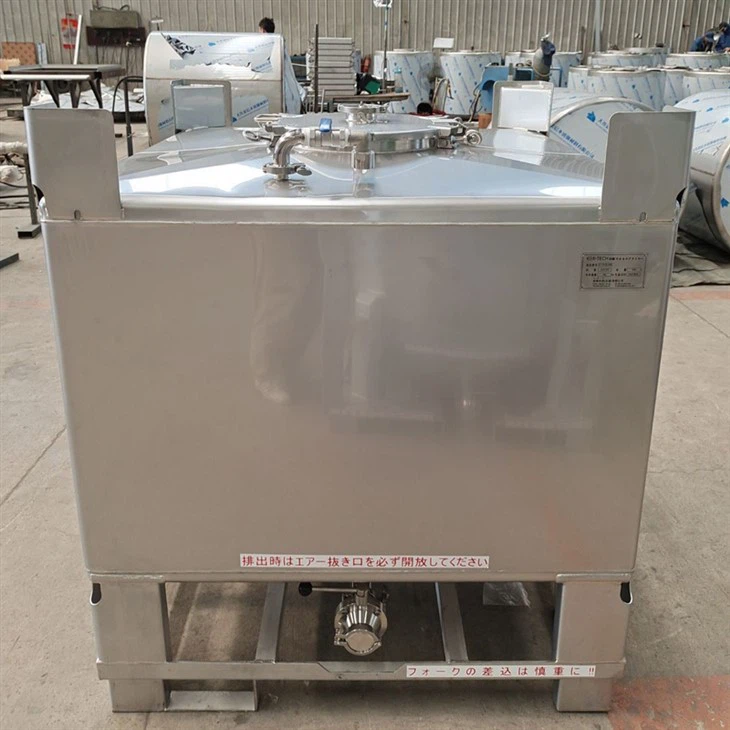
At our company, we offer a wide range of Stainless Steel IBC Tanks designed to meet the diverse needs of our customers. Our Stainless Steel IBC Tote are available in different sizes and configurations, ensuring that we can provide the right solution for any liquid storage requirement. We also offer Steel Totes and Stainless Steel Tank With Heating Function for specific applications.
Our team of experts is always available to assist customers in selecting the most suitable tank for their needs. We take into account factors such as the type of liquid to be stored, its concentration, temperature, and any special requirements. By providing high - quality products and professional advice, we aim to ensure the safety and efficiency of our customers' liquid storage operations.
Contact Us for Procurement
If you are in need of a reliable and high - quality Stainless Steel IBC Tank for your liquid storage needs, we invite you to contact us. Our experienced sales team is ready to discuss your requirements in detail and provide you with a customized solution. Whether you are storing water - based liquids, chemicals, petroleum products, or food and beverage items, we have the expertise and products to meet your needs.
References
- ASM Handbook Committee. (2004). ASM Handbook: Volume 13A Corrosion: Fundamentals, Testing, and Protection. ASM International.
- Schweitzer, P. A. (2012). Corrosion Resistance Tables, 5th Edition. McGraw - Hill Professional.
- Ullmann's Encyclopedia of Industrial Chemistry. Wiley - VCH Verlag GmbH & Co. KGaA.